She draws pink cats with party hats. When I was her age, I colored between the lines of someone else’s perfectly rendered feline. I chose the correct colors—gray, black, or brown.
Penelope sews, too. Her stitches this year are smaller and straighter, but I will always treasure the first ones—inches long, slanted, sometimes a button hung by a single thread. She makes pillows and quilts for her dolls, but my favorite of her creations are two pieces of fabric, ragged around the edges, sewn together on three sides without stuffing. These are not pillows, she tells me, nor are they pouches, purses, or bags—no straps or handles—they’re pockets, ready for any skirt or slacks in need of them. If someone says her creations are bad or wrong or useless, she fiercely disagrees or just doesn’t care. I have fought for those qualities all my life.
I look at the pants I’m wearing. They fit well, they’re comfy, but pockets? Not one. No place to stash a Kleenex, cell phone, keys, or credit card. Others in my closet have shallow side pockets cut at a slant so the contents spill out when I sit down, like the punch line of a bad joke. When I’ve misplaced my phone or forgotten my purse yet again, I peruse the internet. Sometimes a false hope pops into view—a fake pocket with the top sewn shut, a reminder that appearances can disguise the things we lack.
Yes, cargo pants have pockets of all sizes and skin-tight leggings have side pockets for cell phones, but you’re not going to get this granny in either of them. I remember a pair of yellow pedal pushers—that’s what we called them then—that ended just below the knee, for riding bikes or skating. They had a deep pocket on each side to keep a skate key, a bandage for a skinned knee, or a nickel for a popsicle. When I was a kid, pockets made me feel safe and self-contained, like I could take care of myself. They still do. The act of slipping on a dress or pants with proper pockets gives me pleasure. From my first step, there’s a difference to my gait, confidence, joy. Why didn’t I notice that before? I’m a grandmother still learning to listen to my body.
Recently, I noticed my granddaughter Maya, two years old, wearing a flowered dress with two front pockets. “How special to have a dress with pockets!” I told her. Then her mother, my daughter Katie, told me that pockets are a feminist issue, part of the history of women’s rights. How did she know that, and why didn’t I? For centuries, women didn’t have pockets, or made do with large, tie-on pockets underneath their petticoats. In need of a hanky, they’d have to hold the sneeze until they found a place to undress. Men’s jean pockets are nearly twice as big as women’s, and they’ve had pockets sewn into coats, waistcoats, breeches, and pants for centuries, keeping their valuables close and hands free for shaking, smoking, backslapping, gunslinging, or carrying things for women who don’t have pockets.
I learned that around the turn of the twentieth century, when men’s suits sported fifteen pockets and women’s clothing had none, first-wave feminists formed The Rational Dress Society and created the Suffragette Suit, with no less than six pockets. We got pockets in the 1920s, ‘30s and ‘40s, but meanwhile, the pocketless dress was encroaching. Male designers abhorred bulges in favor of fabric that draped from boyish frames. As models’ breasts and hips got smaller, clothes got slinkier, the fashion handbag industry boomed, and pockets disappeared.
Like most women, I carry handbags of all sizes. I usually carry them with the shoulder strap slung over my head to the left, then across my chest and tucked under my right arm, extra secure so it won’t slip off if I lower my arm or someone tries to take it from me. Once, on a dark night in Copenhagen, I was lucky I didn’t have a handbag. All my money was in my pockets, and I carried only a small basket of groceries in my right hand. When a guy jumped me from behind, I didn’t have to stop and think: Does he want my purse? Should I give him my purse? Oh, God, what if he doesn’t want the purse? Nope, I simply dropped the basket, delivered a quick right hook, and smashed him in the face. That’s the power of pockets.
Penelope’s pockets hold shells and stones picked up from the beach, pipe cleaners, beads, feathers, chalk, Goldfish crackers, and money of her own. Pockets give her the right to conceal, to keep her possessions safe, a place to put her hands when they’re cold or tuck them in when she walks just for the pleasure of it. And if she needs to fight she can pull them out, quick on the draw.
Recently, I checked her closet and was chagrined to find that none of the dresses I had bought for her third, fourth, and fifth birthdays had pockets. For her sixth birthday, I found a woman designer who has closed the pocket gender gap, and I chose a dress in her favorite color, teal. She grinned as she slipped it on, but before she twirled the full, ruffled skirt, she stuffed her hands in the large front pockets all the way up to her wrists. Then she thrust her arms out, threw her head back, and spun her joy.
From her basket of pockets Penelope let me pick one for myself. I chose one with paisley on one side and flowers on the other. I won’t tell her today that her work is a feminist act, that she is one in a long line of women who must claim and reclaim the control of our bodies and the work of our hands, generation upon generation. Let there be delight in her creations now, the simple comfort and pleasure of their use. For now, I cherish this imperfect pocket made by my granddaughter, who needs no permission or approval for her work. She is one of the fearless young women who will once again stitch and sew and piece together what they need as they leave the baggage of centuries behind.
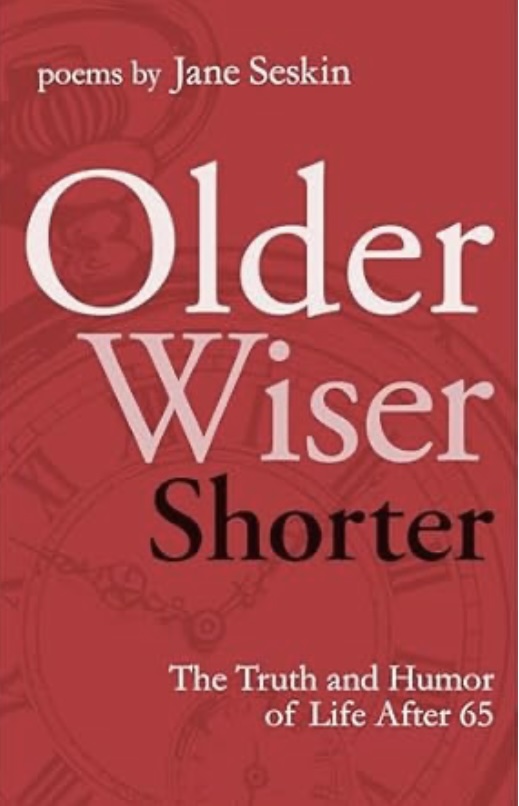 Older Wiser Shorter is an intimate collection of 89 poems from Jane Seskin, a working psychotherapist and author. Seskin, authentic, funny, insightful, quirky and heartfelt, acknowledges the disappointments, physical vulnerability and emotional loss taking place in her senior years. She is able to discover within herself a solid sense of power, resilience and new-found joys through her struggles to acknowledge, accommodate and accept her aging. Seskin's ability to make the very personal universal, will resonate with readers seeking to discover new ways to honor the past, celebrate the present and welcome the future. A Reading Guide to the poems will inspire further reflection and discussion for book and women's groups.
Praise for Older Wiser Shorter:
“Even tho I’m not a fan of poetry, I found Jane Seskin’s poems to be a delight. They hit home.”
— Jane Brody, former Personal Health columnist, New York Times
“I sat down to read one poem last night and I ended up reading half the book. I feel as though I know you. You have definitely captured the experience of aging.”
— Mary Pipher, author of Women Running North and My Life in Light
“Candid, funny, and best of all inspiring, the poems in Jane Seskin’s Older Wiser Shorter throw open a window on aging. Suddenly a breeze of resilience sails through. I learned from Seskin’s poems; they became like mentors for the strange adventure of late-life living. Kindness infuses them. The ‘enormous optimism’ of this intrepid book might prove the greatest wisdom of the ages.”
— Molly Peacock, author of The Analyst
Older Wiser Shorter is an intimate collection of 89 poems from Jane Seskin, a working psychotherapist and author. Seskin, authentic, funny, insightful, quirky and heartfelt, acknowledges the disappointments, physical vulnerability and emotional loss taking place in her senior years. She is able to discover within herself a solid sense of power, resilience and new-found joys through her struggles to acknowledge, accommodate and accept her aging. Seskin's ability to make the very personal universal, will resonate with readers seeking to discover new ways to honor the past, celebrate the present and welcome the future. A Reading Guide to the poems will inspire further reflection and discussion for book and women's groups.
Praise for Older Wiser Shorter:
“Even tho I’m not a fan of poetry, I found Jane Seskin’s poems to be a delight. They hit home.”
— Jane Brody, former Personal Health columnist, New York Times
“I sat down to read one poem last night and I ended up reading half the book. I feel as though I know you. You have definitely captured the experience of aging.”
— Mary Pipher, author of Women Running North and My Life in Light
“Candid, funny, and best of all inspiring, the poems in Jane Seskin’s Older Wiser Shorter throw open a window on aging. Suddenly a breeze of resilience sails through. I learned from Seskin’s poems; they became like mentors for the strange adventure of late-life living. Kindness infuses them. The ‘enormous optimism’ of this intrepid book might prove the greatest wisdom of the ages.”
— Molly Peacock, author of The Analyst
 Victoria Millard is a Seattle writer of essays, memoir, and humor, and a proud grandmother of five. She received her M.F.A in Nonfiction from Pacific University and has published in Narratively, Halfway Down the Stairs, Intima: the Journal of Narrative Medicine, and others.
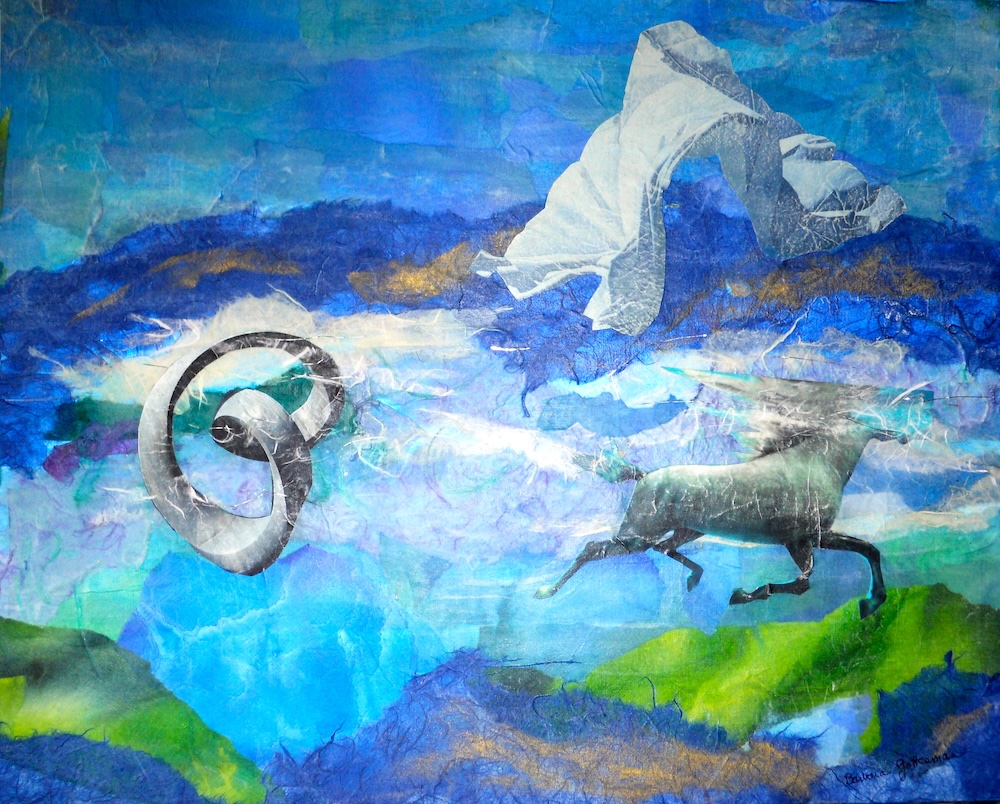
  Barbara Gottesman retired at 67 as chair of the Educational Leadership Department at San José State University to see if she could become an artist. She took classes in watercolor, acrylic, and Chinese brush painting, and explored on her own to find collage as her speciality. She currently has a solo exhibit at The Villages in San José CA.
Delightful story. Let’s hear it for pockets! Now, do pantyhose. I remember going to JC Penney years ago, where I used to buy all my pantyhose, and was not able to find that section in the story anymore. They do so much: compress the right places, even the skin tone, cover scars and blotches, and keep the legs warm. Let’s hear it for pockets and pantyhose!
More Pockets! More Pockets!
Quite delightful! I love pockets too.
Love this essay. I am a trans woman who came out at the age of 68. I miss my pockets. It is the only thing I miss post transition. I feel a poem about pockets working its way from this muse into my consciousness.
Enjoyed..Best pockets I had were in dresses I bought at flea markets.sleevelees.beautifil African prints with deep pockets..a housedress.streetdress ..functional…cheap…pretty..have just one left.