At the school, faculty members got a five-year review of their teaching, scholarship, and community service, regardless of whether they had tenure. I’d decided to retire before my next review but told no one. That knowledge let me spring a surprise on folks in those corseted corridors.
For less than three dollars, I bought a box of children’s face paints. The six colors— red, yellow, blue, green, black, and white—proved enough for my purposes. I pulled the box out of a desk drawer every morning and painted my face before teaching. The school had rules to discourage novelty, but in it had failed to regulate face-painting.
I went to town. A bolt of lightning slashed down my cheek one day. A heart beamed from one cheek the next day. I painted a night sky, complete with stars and a quarter moon, on my forehead another time. A red question mark in the middle of my forehead garnered the most stares.
Students’ reactions held some surprises for me. I learned that a painted face trumped a brown skin when it came to their perceptions. The flowers and goldfish took them by surprise, threw off their expectations. The bees and spiders on my face swept away, or at least suspended, preconceptions. My students could take me in with less racial garbage. We had a straighter shot at connection.
The images also let me add sauce to the vocabulary I served up in Spanish 101. Few of my students forgot the meaning of bombilla after seeing the yellow lightbulb outlined in black on my forehead.
My two-dollar box of paints also helped me address the broader issues of college life. It provided a platform on which to stand against the frequent life-sapping grayness of academia. College teaching and learning rank as serious business, but they need not bury one alive.
I admit that I relished hard looks from some administrators because I knew my retirement plans put me beyond their reach. Faculty meetings seemed less poisonous when I joined them with a giant sunflower painted on my left cheek.
Yes, I savored the disapproval of those two years, but also the fun. One day, I painted my nose black and drew whiskers and a ruff on my face. A student asked, “Que pasa con la cara?”
“It’s International Cat Day,” I replied, “and I’m celebrating.” Only later did I learn that there is indeed such a holiday.
The face painting drew me closer to my students, who anticipated fun and, one told me later, bet on what I’d paint next. After years shrouded in grayness, my paint box also gave me a foretaste of rainbows that could come my way with retirement.
 Older Wiser Shorter is an intimate collection of 89 poems from Jane Seskin, a working psychotherapist and author. Seskin, authentic, funny, insightful, quirky and heartfelt, acknowledges the disappointments, physical vulnerability and emotional loss taking place in her senior years. She is able to discover within herself a solid sense of power, resilience and new-found joys through her struggles to acknowledge, accommodate and accept her aging. Seskin's ability to make the very personal universal, will resonate with readers seeking to discover new ways to honor the past, celebrate the present and welcome the future. A Reading Guide to the poems will inspire further reflection and discussion for book and women's groups.
Praise for Older Wiser Shorter:
“Even tho I’m not a fan of poetry, I found Jane Seskin’s poems to be a delight. They hit home.”
— Jane Brody, former Personal Health columnist, New York Times
“I sat down to read one poem last night and I ended up reading half the book. I feel as though I know you. You have definitely captured the experience of aging.”
— Mary Pipher, author of Women Running North and My Life in Light
“Candid, funny, and best of all inspiring, the poems in Jane Seskin’s Older Wiser Shorter throw open a window on aging. Suddenly a breeze of resilience sails through. I learned from Seskin’s poems; they became like mentors for the strange adventure of late-life living. Kindness infuses them. The ‘enormous optimism’ of this intrepid book might prove the greatest wisdom of the ages.”
— Molly Peacock, author of The Analyst
Older Wiser Shorter is an intimate collection of 89 poems from Jane Seskin, a working psychotherapist and author. Seskin, authentic, funny, insightful, quirky and heartfelt, acknowledges the disappointments, physical vulnerability and emotional loss taking place in her senior years. She is able to discover within herself a solid sense of power, resilience and new-found joys through her struggles to acknowledge, accommodate and accept her aging. Seskin's ability to make the very personal universal, will resonate with readers seeking to discover new ways to honor the past, celebrate the present and welcome the future. A Reading Guide to the poems will inspire further reflection and discussion for book and women's groups.
Praise for Older Wiser Shorter:
“Even tho I’m not a fan of poetry, I found Jane Seskin’s poems to be a delight. They hit home.”
— Jane Brody, former Personal Health columnist, New York Times
“I sat down to read one poem last night and I ended up reading half the book. I feel as though I know you. You have definitely captured the experience of aging.”
— Mary Pipher, author of Women Running North and My Life in Light
“Candid, funny, and best of all inspiring, the poems in Jane Seskin’s Older Wiser Shorter throw open a window on aging. Suddenly a breeze of resilience sails through. I learned from Seskin’s poems; they became like mentors for the strange adventure of late-life living. Kindness infuses them. The ‘enormous optimism’ of this intrepid book might prove the greatest wisdom of the ages.”
— Molly Peacock, author of The Analyst
 Constance Garcia-Barrio, a native Philadelphian, writes a monthly column called “City Healing” for Grid, a Philly publication devoted to sustainability and social justice. She won a magazine journalism award from the National Association of Black Journalists for a feature on African Americans in circus history. Her current novel, Blood Grip, based on Philly’s Black history, is jam-packed with adventure, has a dash of romance, and a half-drunk Greek chorus.
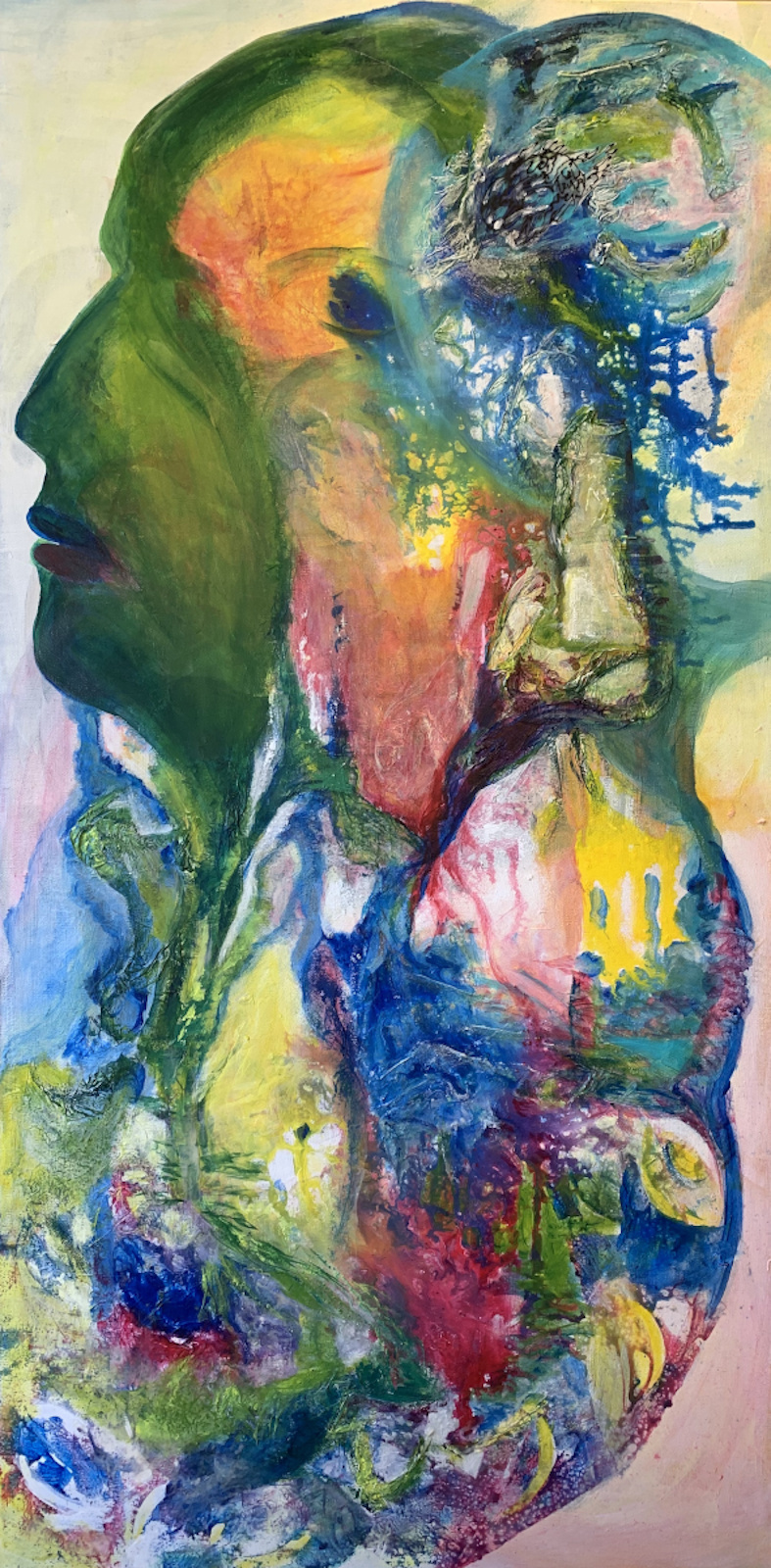
 Indu Varma is a New Brunswick based multi-media artist. Born and brought up in India, she immigrated to Canada in 1969. After a teaching career of 37 years, she pursued her interest in art by enrolling in the visual arts program and graduated with a degree from Université de Moncton in 2016. Based in Sackville, New Brunswick, she paints, creates ceramic sculptures, and does printmaking at Salt Marsh Studio. Her Indian heritage and Indian culture are very much a part of her Indo-Canadian identity. Her Indian roots are reflected in practically every aspect of her life, and her art.
Oh wow! This is so great. You are courageous Constance! Kudos to you!
I love this piece! Such creativity! I can imagine the planning and smiling along the way. “savouring the disapproval and the fun…” Love it!