
In her best-selling book, The Life-Changing Magic of Tidying Up, Marie Kondo wrote that people achieve happiness by piling their possessions on their bed and asking about each one: “Does this bring me joy?” If not, chuck it. This seems to trivialize happiness, bringing it down to the level of choosing one’s favorite coffee mug. Don’t get me wrong. I have a favorite coffee mug. But I’m not willing to state unequivocally that my coffee mug brings me joy. Happiness is an inside job, and my insides are a place much messier than Marie Kondo’s cluttered closets.
I need to fight my tendency to fail to recognize happiness even when it’s in my grasp. It seems that our brains are wired to focus on what makes us unhappy. In “Turning toward the Good” (https://cac.org/daily-meditations/turning-toward-the-good-2016-02-18/), Richard Rohr says that our negative and critical thoughts are “like Velcro, they stick and hold; whereas our positive and joyful thoughts are like Teflon, they slide away. We have to deliberately choose to hold onto positive thoughts before they [will] ‘imprint.’” He continues:
If we’re wired for the negative, then happiness must require adding enough happy thoughts to overcome inherent bias. Does this reduce joy to a numbers game, regardless of the quality of those happy thoughts?
What’s the relationship between happiness and joy? Writing about his conversion to Catholicism in the book Surprised by Joy, C. S. Lewis equated joy to being touched by the Divine. On page 27 he wrote: “Joy… must be distinguished both from Happiness and from Pleasure. Joy (in my sense) has indeed one characteristic, and one only, in common with them; the fact that anyone who has experienced it will want it again . . . Joy is never in our power and pleasure often is.”
If I accept Lewis’ definition, I can’t find joy by looking for it—I have to wait for it to find me. This sounds almost as self-defeating as Kondo’s closet cleaning strategy.
Charles McCullough, a minister, found joy after he was diagnosed with prostate cancer. When a new doctor and additional tests revealed he did not have cancer, McCullough’s euphoria was so profound that he treated it as a born-again experience. As he wrote in his book, Faith Made Visible, with poetry by Maren C. Tirabassi (2000): “I had been redeemed from death. I had been reborn to begin a new future without this terrible threat hanging over me. On my drive home from the doctor’s office, I thought of the mountains and hills bursting forth in singing and the trees clapping their hands.”
McCullough admitted that the daily grind set in all too quickly; even on the ride home, he succumbed to an incident of road rage. He recognized a fundamental question: “How can we keep such joy in our lives?”
McCullough is also a sculptor (see his website at http://www.sculpturebymccollough.com/about). Despite the great joy he felt in sculpting, he felt he was violating a Biblical admonition against creating “graven images.” As he wrote in Faith Made Visible (pp. 4-5), he finally made his peace with this issue by finding a translation of the Ten Commandments that substituted the word “idol” (something one might worship) for “image.”
The joy I felt before a great work of art, the joy I felt in moments when I shaped clay in an especially expressive way, and the joy of experiences of unexpected reprieve were all the same joy. When I experienced reprieve from cancer, I felt the same enchantment with all life as when I was in a highly creative period and when I was under the spell of a genius work of art. At these times I would see, hear, smell, taste, feel, and sense the wonder of God’s creation as if I were the first person on earth.
Perhaps joy can best be experienced not by looking for it in the future but by isolating joyous events in the past and revisiting them, not as a thought but as a sensory experience. One ordinary afternoon in a local park years ago, my three daughters, eight, six, and four, played in a brook. They were delighted by the minnows, giggling as they tried to catch one. The sun, sifting through the branches hanging over the water, lit up their blonde hair. As I felt their attention shift from me and from each other to the world around them, I felt a deep contentment. I forgot my dinner plans, laundry piling up, the unpaid bills. The natural world felt mystical.
This I know: joy must be shared. As a solitary pursuit, it stays a thought, not an experience. Today, I find joy every Friday when I lead a group of creative writers in twelve-step recovery. Unlike the typical workshop in which writers look for what is confusing or can be improved, we seek to find what’s special and affirm it. “Think of yourself as the parent who wants to pin your story on the refrigerator,” I suggest. “Bring your comments from that place.” When I seek to be surprised and delighted by other writers’ work, I feel joy in their accomplishment.
This kind of joy lives in a different domain than cleaning closets or happy times. It’s the joy a child feels with a crayon and paper. It’s the enchantment McCullough felt with his hands in clay, once he gave up the intellectual torment of wondering if he was involved in sin and sank into his desire to create. It’s most alive when I disregard whether what I write will be published, even whether it will be read, and like C.S. Lewis, allow myself to be surprised by joy.
Author's Comment
As I age, joy has become as simple as seeing life through the eyes of my granddaughters, eight and five. I mark their moments of fun and joy and store them for the future.
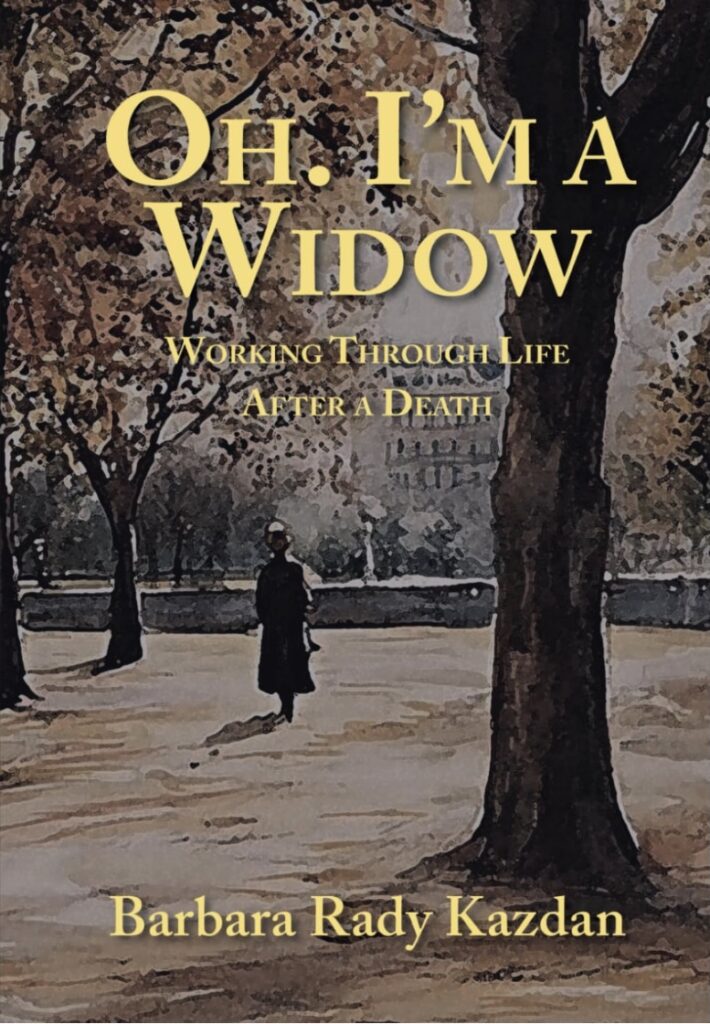 It began, as these things often do, with a question that was never answered. A husband of forty-two years, gone in the blink of a December morning. The house, once filled with the scent of coffee and the rustle of newspapers, now echoing with silence. She was alone. But not defeated.
She didn’t crumble. She called Kay. Kay brought her knitting.
Barbara, a woman who once ran nonprofits with the precision of a Swiss watch, now found herself staring down furnace filters and frozen faucets. She wore grief like a vintage trench coat—heavy, but tailored. She joined a grief group. She learned about ‘widow fog’. She Googled ‘how to cover outdoor spigots’. She did it herself.
She missed her husband. She missed her job. She missed being asked, “What do you do?” and having a damn good answer. So she wrote. Essays at first. Then this book.
She tried online dating. She met men who smelled like old upholstery and talked only about themselves. She kissed frogs. She stayed single. She liked it that way.
She found friends. Not all at once. Not easily. But she found them. A memoir group. A book club. A neighbor who said, “Lunch Tuesday?” and meant it.
She planted a tree in her husband’s memory. It leaned. It bloomed. So did she.
And in the end, she didn’t just survive widowhood. She redesigned it. With grace. With grit. With a pen in one hand and a dog leash in the other.
Available from Amazon, Bookshop, Barnes & Noble, and your local independent bookseller.
It began, as these things often do, with a question that was never answered. A husband of forty-two years, gone in the blink of a December morning. The house, once filled with the scent of coffee and the rustle of newspapers, now echoing with silence. She was alone. But not defeated.
She didn’t crumble. She called Kay. Kay brought her knitting.
Barbara, a woman who once ran nonprofits with the precision of a Swiss watch, now found herself staring down furnace filters and frozen faucets. She wore grief like a vintage trench coat—heavy, but tailored. She joined a grief group. She learned about ‘widow fog’. She Googled ‘how to cover outdoor spigots’. She did it herself.
She missed her husband. She missed her job. She missed being asked, “What do you do?” and having a damn good answer. So she wrote. Essays at first. Then this book.
She tried online dating. She met men who smelled like old upholstery and talked only about themselves. She kissed frogs. She stayed single. She liked it that way.
She found friends. Not all at once. Not easily. But she found them. A memoir group. A book club. A neighbor who said, “Lunch Tuesday?” and meant it.
She planted a tree in her husband’s memory. It leaned. It bloomed. So did she.
And in the end, she didn’t just survive widowhood. She redesigned it. With grace. With grit. With a pen in one hand and a dog leash in the other.
Available from Amazon, Bookshop, Barnes & Noble, and your local independent bookseller. Christine Beck earned her Master of Fine Arts degree in Creative Writing from Southern Connecticut State University and is the author of Blinding Light (Grayson Books 2013), I’m Dating Myself (Dancing Girl Press 2015), and Stirred, Not Shaken (Five Oaks Press 2016). She has also written a book of poetry and prompts called Beneath the Steps: A Writing Guide for 12-Step Recovery. Beck is a former president of the Connecticut Poetry Society and was Poet Laureate of the town of West Hartford CT (2015-17). She writes weekly essays about reading, writing, and real life at http://christinebeck.substack.com. She also regularly writes reviews of poetry books for The Connecticut River Review. Visit her website at
  Celeste Budwit-Hunter works for Johnson Space Center in Houston TX, editing procedures performed by astronauts. Having survived a rare cancer thanks to an unrelated donor, she celebrates her second life through photography, poetry, and hiking in the woods.
I love the article on Joy, Christine. I know I’ve had joyous experiences, one particularly in a sunny glade, when time seemed to still, and I felt the presence of God. Other times you mention are when you are with children who teach us to live in the moment, or when you are creatively writing.
Trying to get published has taken the joy out of writing, and it was a fantastic reminder to just enjoy the flow.
I’m dipping into the Persimmon Tree every morning as part of my spiritual discipline. Though not a discipline, it’s a joy.